Machine Stretch Film
machine stretch film helps AGRI Products Industrial Limited tap into the international market by unique design and excellent performance. The product adopts high-quality raw materials from market leading manufacturers, which ensure its stability and reliability. A series of tests are carried out to improve qualification ratio, which reflects the high quality of the product.
We seek to establish long-term business relationships with clients and partners, as evidenced by the repeat business from existing clients. We work collaboratively and transparently with them, which allows us to resolve issues more effectively and to deliver exactly what they want, and further to build a large customer base for our AGRI Wrap brand.
Machine stretch film is engineered for automated application, delivering secure, stable palletized loads with exceptional cling and puncture resistance, with different focuses and no duplication of content across its performance benefits. Its high-strength composition protects goods during transportation and storage, mitigating damage and maintaining load integrity under demanding conditions. Highly versatile and reliable, it provides an efficient, indispensable packaging solution for a broad range of industries.
- Select the appropriate thickness for optimal load stability and cargo protection.
- Choose a film width that matches your pallet dimensions and machine specifications.
- Determine the required stretch capacity for efficient application and material savings.
- Opt for specialized variants (e.g., UV-resistant, anti-static) for specific environmental conditions.
AGRI Silage Wrap Film is a top-of-the-line product designed to keep your silage fresh and protected. With a field-tested at least 12-month warranty, you can trust in the quality and reliability of AGRI Wrap. Made in China and supporting the local economy, our silage wrap film is constructed with UV protection and manufactured with industry-leading technology. The auto-gauge control ensures superior resistance to puncture, abrasion, and tear, giving you peace of mind knowing that your feed is in good hands.
Variety of Core Options
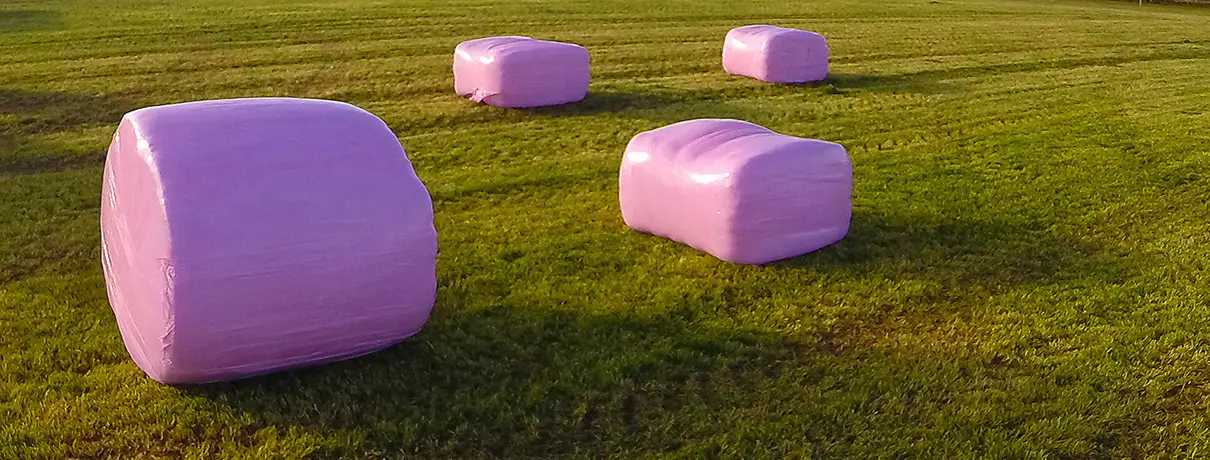
AGRI Silage Wrap Film is available with both plastic and cardboard core options. The plastic core is robust and water-resistant, while the cardboard core offers cost savings and is eco-friendly. With thickness options ranging from 1 mil to 1.5 mil, and width options of 20" or 30", you can choose the perfect combination for your specific needs. Additionally, AGRI Wrap comes in a variety of color options including white, black, green, pink (Breast Cancer Awareness), and various other colors upon request.
Conclusion
In conclusion, AGRI Silage Wrap Film is the perfect choice for all your silage wrapping needs. With a field-tested 12-month warranty, UV protection, and industry-leading technology, AGRI Wrap offers superior resistance to puncture, abrasion, and tear. Made from premium resins and state-of-the-art blending and extrusion control, our product ensures tightly wrapped bales and maximum uptime. Choose from a variety of core, thickness, width, and color options to customize your experience. Trust in AGRI Wrap for all your silage protection needs.
✔ Virgin LLDPE resin (DOW/EXXON) — Ensures consistent stretch stability and uniform quality
✔ Superior tack, unmatched elasticity, and resilience against punctures.
✔ Multiple colours available (White/Green/Black) also we can do Colour Custom Made
✅ Available specifications:
Thickness:20mic/22mic/25mic/30mic
Width:250mm/330mm/375mm/500mm/750mm
Length:1500m/1800m
✅ Fast & Reliable shipping, our professional logistics team ensures your order arrives safely and on time.
💼 Ideal for:
Agricultural wholesalers
Farm supply distributors
Regional agents & importers
💬 OEM logo & packaging customization available.
Let’s build your brand together!
AGRI Products Industrial Limited
www.silagewrap.com www.balenetwrap.com